Monday, August 15, 2011

Can Justice And Mercy Coexist?

They can co-exist and in a perfect world, they always would. One definition of justice is "the principle of moral rightness; equity." Justice can be served within the bounds of compassion. A person can be held accountable for a crime or misdeed without being tortured or treated inhumanely. The Constitution, of course, even forbids "cruel and unusual punishment." Being merciful does not require ignoring crimes or transgressions. It means taking into account the humanity of one who has committed a crime or transgression while seeking equity. Mercy is an essential part of justice. It is important that the concept of "tit for tat" or "an eye for eye and a tooth for tooth" is not justice. That is only revenge.

The purpose of justice is not to seek revenge, but to secure well being of the society as a whole. There are times when this can only be secured through punishment. But more often, mercy and the act of forgiving are more effective ways of securing well being for all. Mercy gives the offender an opportunity to reform and improve. At the same time it also gives mental peace and satisfaction to the person showing mercy.
In Merchant of Venice,
"Quality of mercy is not strain'd
It droppeth as the gentle rain from heaven,
Upon the place beneath. It is twice blest:
It blesseth him that gives and him that takes."

An example of mercy in justice is the recent example of the Iranian woman, who was blinded and badly disfigured in an acid attack.  Following the Iranian law of an eye for an eye, the man would be blinded (given the same treatment as the woman has suffered).However what really impressed the world is that the woman decided not to blind the man and instead forgive the man. The fact that the court gave the opportunity for the victim to revenge is upholding justice, but mercy is at the same time seen, since the victim chose not to carry out the punishment on her attacker.  The victim’s act has saved her attacker from the cruel sentence of having acid being splashed on his face, but we cannot deny that justice is not served – the attacker would probably have to be jailed for a long, long time. 

In conclusion, justice and mercy can co-exist, perhaps in different situations. Both justice and mercy are required to achieve good, functioning society. The key point here is knowing when to show mercy and when to show justice as an excess of either may threaten the stability of our society. 

Sunday, August 14, 2011

Term 3 Week 5 Assignment

What do you think is Shakespeare's main intention of creating Shylock in The Merchant of Venice?
________________________________________________________________________


Shylock is only aiming for money and revenge. He lends out money at interest which a lot of people thought is wrong. As an outcast in Venice, Shylock had to survive by as many means as possible, and money-lending was perhaps the only profession left for the Jews by the laws of Venice, which barred Christians from money-lending, and Jews from almost everything else. It is Shakespeare's achievement that while we are disgusted by Shylock's evil obsession, we can understand, almost sympathize with his position. He must ruthless to survive; he is an alien whom Venetian merchants that he has to work with spit upon - Antonio most of all. 


In Act III Scene i, Shylock is tortured by Jessica's elopement and the loss of his money, takes comfort in the loss of Antonio's ships, and asserts his humanity, his feeling of loss, when Solanio makes a coarse joke: " I say my daughter is my flesh and blood." Shylock makes us realise the common humanity linking all men, Christian or Jew: ' If you tickle us, do we not laugh? '. Shylock's image is a money-lending robot with no feelings at all, no desire fro anything other than money-grabbing, but this tells us of his capacity for simple enjoyment. The reasonable conclusion that Shylock draws is that revenge is natural - normal behavior in Christians, and also in Jews. The important thing is that now he has the power to do it. 


Tuesday, August 9, 2011

Term 3 Week 4 (Blogging Assignment)


Term 3 Week 4 (Blogging Assignment)
Read the following Newsweek article, How to Raise a Global Kid, byLisa Miller (July 18, 2011)


What is the main argument Jim Rogers is trying to make in this article? Do you agree with his argument? Justify.
_________________________________________________________________________

In my opinion, Jim Rogers' main argument is that in order to survive in this globally competitive world, one must be able to have a good grasp of various languages, which means being bilingualism or multilingualism. With the rise of the global superpower China, it is very important to learn how to read and speak Chinese. That is why there are schools like Hwa Chong Institution which pushes out special programmes like BSP (Bicultural Special Program) which trains students to be bilingual. In order to be adequately prepared for the future globalized world we are going to be in, the children and the teenagers of the 21st Century must start to be exposed to foreign people, foreign languages, and foreign lands. the people of Singapore needs to learn at least the basic English and Chinese.  America may be the superpower at the moment but Jim Rogers is critical of this, as America is disregarding the rapid pace of globalization. China has a huge domestic market and to do business in China, Multi-National Companies  need people who can speak Chinese and know how to do business in a Chinese cultural context. Knowing the language and the Chinese culture will give us an edge when competing for an important position. Knowing the Chinese culture will reduce cultural shock and help us understand the Chinese counterparts better. 


English is still very important because it is still considered an international language as it is still the most commonly used language. Almost all websites are in English and there are not as many Chinese websites than English websites. In conclusion, I agree with Jim Rogers point of view.

Saturday, July 23, 2011

Term 3 Week 3 (Blogging Assignment)

Read the following letter:
(1) Comment on the Janalle Lee's view on the education system in Singapore.
(2) Is an ideal education possible? Explain.
Post your 500 word response on your blog.
_________________________________________________________________________

Janelle's letter has effectively brought across to the MOE the total views of students and teachers on the Singapore's system. In the letter, Janelle has managed to voice out our concerns about the holes in the education system.  Although the government’s investment in education has paid off and Singapore's education system has so far been considered as one of the best educations in the world, Singaporeans ourselves do not think so. 

One of the key points of Janelle's letter would be that students are not encouraged be asking questions. They are forced to memorize lots and lots of mathematical and scientific formulas, as well as model essays for Literature and Humanities, and are later expected to vomit all these memorized information out during examinations. This "vomited" information is usually never retrieved, and the students do not gain anything in the end. What makes up learning? Questioning and curiosity are the key pillars of learning. The students would be passionate about acquiring new knowledge, and ignite their love for learning so they can absorb information more efficiently and effectively. Only through questioning can one get answers and improve intellectually. If an education system suppresses the students' inquisitiveness in exchange for long chunks of text to be memorized, then this system would not be an effective one.

Friday, July 22, 2011

Term 3 Week 2 (Blogging Assignment)

An article entitled 'The Religion of Water' was published in The Straits Times on 7 July 2011. In the article, it was mentioned that ' within countries, there is debate over whether water should be treated as a human right or as a commodity, access to which is determined by the market.' Please read the article.
Is there a difference between treating water as a human right and as a commodity? In your opinion, should water be treated as a human right or as a commodity?
Post your 300 word response on your blog.
_________________________________________________________________________

Water is a very important factor in our lives. Without water, there will be no food, then there will be no life on Earth. "The human right to drinking water is fundamental to life and health. Sufficient and safe drinking water is a precondition for the realization of human rights."
— United Nations 'General Comment' on the Right to Water.  There is no substitute for water in the maintenance of human life. With increasing population and growing water usage, water shortages have become a source of potential and ongoing conflicts. One of the main issues is the competing claims of upstream and downstream nations. 


As downstream nations (for example, Egypt, Israel, Iraq and Vietnam) attempt to win more water rights, upstream nations (in the above examples, respectively Ethiopia, Lebanon, Turkey and China) try to keep control of the water resources in their territories through such means as irrigation schemes, reservoirs and hydro-electric projects. While current resources are insufficient in many regions, water will become ever scarcer in the future due to phenomena such as climate change, population growth, the exhaustion of ground-water reservoirs, and the increase in per capital water use associated with economic growth. Thus tensions are likely to rise further over the next decades; some experts are already predicting armed conflicts over the control of water resources in areas such as Africa and the Middle East. 


Humans, as aqueous creatures, are dependent on water for sustenance. Water cannot be substituted, unlike some other forms of resources. The preservation of life is solely dependent on water. While food is also a fundamental element to sustain life, food is a variation of different items which can effectively substitute one another. "Every eight seconds, somewhere in the world, a child dies from a disease related to shortage in drinking water and health services." (WHO, 2000).


Some may say that making water a commodity will allow people to start on water conservation. However, when it comes to the time where people conserve water because it is made commodity, many poor families will start dying because they cannot afford the water. Sacrificing those who are poor to let others realise the preciousness of water is not fair. The wealthy people are not in any way more deserving of Earth's water than the poor people.

Term 3 Week 1 (Blogging Assignment)

Veteran labour leader Halimah Yacob recently called for the legislation of weekly days off for maids working in Singapore. This has sparked off an intense debate amongst Singaporeans. In your opinion, should the giving of weekly days off be legislated in Singapore?
Post your 300 word response on your blog.
_________________________________________________________________________

Maids are humans just like us so they should be treated equally like other workers. All workers, including maids, have the right to appeal for legal protection to ensure that they are not abused or forced to be overworked by their employers. However, some Singaporeans have the wrong mindset that maids are inferior to us and that they are paid to work for their employers and not being allowed to rest. 

Employers cannot expect the maids to carry out their routine duties as per normal every day like robots. As human beings, they would also get tired after working so hard for a week, much less like us who face a labor less vigorous than the maids. Some employers even make the maids perform work which falls outside their scope of work, which emphasizes on the need to implement this law. This basic legislation also seeks to protect vulnerable domestic workers who are still suffering in silence. In the long run, we have to admit that even Singaporeans do struggle with daily household responsibilities.


On the other hand, some individuals might think that weekly leaves for maids should not be legislated in Singapore. If the maids get into trouble while they are on leave, this responsibility falls on the employers. Therefore, some of these maids may seize the opportunity to make trouble for their employers. If maids were given too much rest, they might become lazy as even if they do not do a good job, they know that they will surely get a day off. 


In conclusion, I still think that maids should be given a day off. 

Monday, May 2, 2011

Term 2 Lesson 3: War - A Journey In History

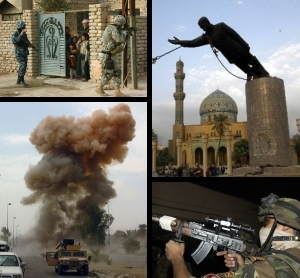
Iraq header 2.jpgIRAQ WAR

1)What caused this war?

Prior to the invasion, the governments of the United States and the United Kingdom asserted that the possibility of Iraq employing weapons of mass destruction (WMD) threatened their security and that of their coalition/regional allies. In 2002, the United Nations Security Council passed Resolution 1441 which called for Iraq to completely cooperate with UN weapon inspectors to verify that it was not in possession of weapons of mass destruction and cruise missiles. The United Nations Monitoring, Verification and Inspection Commission (UNMOVIC) were given access by Iraq under provisions of the UN resolution but found no evidence of weapons of mass destruction. Additional months of inspection to conclusively verify Iraq's compliance with the UN disarmament requirements were not undertaken. Head weapons inspector Hans Blix advised the UN Security Council that while Iraq's cooperation was "active", it was not "unconditional" and not "immediate". Iraq's declarations with regards to weapons of mass destruction could not be verified at the time, but unresolved tasks concerning Iraq's disarmment could be completed in "not years, not weeks, but months".

2)  What were the outcome and consequences of the war?

113,494 – 122,483 violent civilian deaths from the conflict. The financial cost of the war has been more than £4.55 billion ($9 billion) to the UK, and over $845 billion to the U.S., with the total cost to the U.S. economy estimated at $3 trillion. Criticisms include:
  • Legality of the invasion
  • Human casualties
  • Insufficient post-invasion plans, in particular inadequate troop levels (a RAND study stated that 500,000 troops would be required for success)
  • Financial costs with approximately $612 billion spent as of 4/09 the CBO has estimated the total cost of the war in Iraq to U.S. taxpayers will be around $1.9 trillion.
  • Adverse effect on U.S.-led global "war on terror"
  • Damage to U.S.' traditional alliances and influence in the region, especially Israel and Saudi Arabia.
  • Endangerment and ethnic cleansing of religious and ethnic minorities.
  • Disruption of Iraqi oil production and related energy security concerns (the price of oil has quadrupled since 2002)
Malnutrition rates have risen from 19% before the U.S.-led invasion to a national average of 28% four years later. Some 60–70% of Iraqi children are suffering from psychological problems. 68% of Iraqis have no access to safe drinking water. A cholera outbreak in northern Iraq is thought to be the result of poor water quality. As many as half of Iraqi doctors have left the country since 2003. 


3) What are the lessons learnt from the war?

Too much too soon. Execution of the war and the speed of advance outstripped planning. The military expected to take seven weeks to reach Baghdad, but took only two. The rapid sweep left a vacuum in its wake, and politics abhors a vacuum. Backfill put people into power who were sometimes no better than those deposed.

Yet no one would argue that we should have purposely gone slower. The surprising speed was a great help in many ways, but we hadn’t adequately prepared for it. It is not sufficient to be prepared for the worst case scenario. Unexpected success brings unique problems, as well as easily missed opportunities. We were not sufficiently prepared to transition so early into a peacekeeping mode.

Reality TV. Before the war, many military leaders opposed wartime teleconferencing. They feared it would encourage premature decisions and their promulgation before careful review. But now most have changed their minds. Face-to-face discussions convey information that can get lost in carefully composed memos. Remote commanders get a better sense of the battlefield, and troops get a better sense of what the commanders want and expect. So far, teleconferencing has led not only to quicker decisions, but to better ones.

Cities are jungles. Iraq is mostly desert, but that proved mostly irrelevant. Virtually all fighting took place in or near cities, where visibility is low, and the greatest dangers are ambush, snipers, and booby traps – more akin to the Vietnam experience than to Iraq War I. Over the past two decades, about 70% of U.S. military engagements have been urban, so we should have been better prepared. But we have grossly inadequate facilities for urban training, and our soldiers spend little time doing it. That must change.

The city environment also neutralizes much of our high tech advantage. GPS doesn’t work indoors, and often fails outdoors in narrow alleys. Our high tech communications also have problems. Some of our radios use frequency hopping (rapid changes in frequency) to avoid detection and location, but they work only when there is good propagation at all frequencies, a condition often not met in cities. So after a few weeks urban fighting, some soldiers (and officers) had their families send them citizen band walkie-talkies from Radio Shack. When you are under fire, it may be more important to be able to call for help immediately rather than maintain covert communications. This experience is reminiscent of Gulf War I, when families sent soldiers cheap GPS receivers.

Problems of precision. On D-Day in World War II, we dropped leaflets warning all French citizen who lived within 50 km of the coast to evacuate. Our bombers and artillery demolished entire towns because it was the quickest way to eliminate a handful of entrenched Nazis. Our concern for noncombatants has changed. Civilians now count for much more than they did in World War II, perhaps because we are better at counting them. Minimizing “collateral damage” has become a major constraint in modern war fighting. Our precision weapons are still not perfect, but they are getting much better; they reduced the number of noncombatant deaths to a much lower level than many predicted. As a result, most Iraqi civilians chose not to evacuate cities, and the massive refugee problem that many feared never materialized. But an unfortunate consequence of precision is that U.S. troops had to fight battles in the midst of innocents – the people they were there to save.

The military describes the current situation as “a three block war.” In block one we are feeding and giving medical care to the Iraqi people. In block two we are patrolling, acting as peacekeepers and policemen. In block three we are engaged in full combat. In Iraq all three blocks are sometimes adjacent and coincident in time. Follow a suspected sniper, but be careful; if you throw a hand grenade into his room of hiding, you may kill innocent civilians. You can’t even throw a “flash bang” stun grenade, because that could hurt a baby. This kind of fighting is so new that abstract planning is of little help; we are learning as we go along.

Insufficient psyops. Psyops, for “psychological operations,” is the modern version of propaganda war. The important aspects of current doctrine include: talk the local language, know the local culture, and speak the truth. This last requirement surprises some people, but the military wisely makes the assumption that truth is our ally and the enemy of our enemies. If you never lie, you have hope of winning the trust of the civilians. Psyops worked remarkably well in Afghanistan. Our Special Operations Forces could speak local languages, and they could leverage the help of local people. The remarkable result: Afghanistanis saw themselves liberated by fellow Muslims.

But skill at psyops is largely a specialty of the Army Special Operation Forces. With the much larger force in Iraq, psyops failed. The average Army soldier has virtually no knowledge of Arabic, and only superficial understanding of local culture. The Marines and the other forces have even less preparation in psyops.

Knowledge of culture goes well beyond not shaking with your left hand, or not showing the bottoms of your feet. For example, if you chase a terrorist into a building, you must knock before entering. Our soldiers now do this. It sounds ludicrous, but if you don’t knock, and as a result you see a woman uncovered (maybe just her face) you could capture your terrorist but create several new ones. A husband or brother or both may feel obliged to take revenge for the insult, to restore family honor, regardless of their political beliefs.

Decentralized intelligence. In the continuing conflict, a surprise success is “Dragon Eyes,” a remotely piloted vehicle that can be carried in a backpack. It looks like a model airplane, with a wingspan of only 1.2 meters and weight of 2.5 kg,. It can be launched with a toss, or with a bungee cord. Dragon Eyes is guided by GPS. It flies quietly at an altitude of 150 meters using a zinc-air battery for power, and can transmit 18 frames per second of visible or infrared video from a range up to 10 km. If spotted by the enemy, it is easily mistaken for a bird.

What makes Dragon Eyes so valuable is that it is easy to use (training takes less than a week), and it provides “actionable” intelligence – information needed immediately. Soldiers deploy it when they need to know what lies behind that building, or near that bridge. It’s cost is so low (soon to come down to $50k) that it can be “owned” at the platoon level. (Generals don’t waste time with things that cheap.) In the next two years, the marines will get 342 of these little marvels.

Despite the rise of the dragon, the most important source of actionable intelligence remains Humint, short for human intelligence. Humint exploitation teams (HETs) get reports from sympathetic Iraqis, not only for big news items (where is Saddam Hussein?), but more frequently for key but less newsworthy information such as the location of a roadside bomb. We now find a large number of these before they are set off.

Good news. It is important to learn from success too. I mentioned teleconferencing, Dragon Eyes, and the positive aspects of precision, but there are other things that went right. The oil fields were saved, even though Saddam had loaded them with explosives. His troops arrived at the huge Mosul dam to blow it up – but our military (with decisive help from local Iraqis) prevented them from doing so. A great sandstorm, the kind that had foiled President Carter’s hostage rescue in Iran, was endured without major problem. Most of the Iraqi infrastructure was preserved, so the post war recovery could proceed at a slow but measurable pace. These successes were due, in part, to the speed of the invasion. Despite the problems of the rapid pace, I know nobody who thinks we should have gone slower on purpose, as did McClellan in the Civil War.

Some say the military is always fighting the last war. That is not my impression. Our armed services do a better job of learning from their mistakes than any other large organization I know. I wish that the rest of government, and scientific establishments, could learn with similar speed. We are far from mastering the new kind of urban war in which we do battle in the midst of innocents and demand extremely low collateral damage. We are learning as we go. Our strength is enormous -- but, just as in biological evolution, it is often more important to be adaptable than to be strong.



Sunday, April 17, 2011

Expository essay (Does nuclear energy still have a part to play in the world?)

Nuclear energy is a form of an energy source just like natural gases, oil or petroleum. However, the nuclear energy plant has caused a nuclear crisis in Japan. Therefore, many people may now think that all the nuclear plants can only cause disasters. So, does nuclear energy still have a part to play in the world?


Firstly, what is nuclear energy? Nuclear energy originates from the splitting of uranium atoms in a process called fission. At the power plant, the fission process is used to generate heat for producing steam, which is used by a turbine to generate electricity. 


Nuclear energy is used to provide heat energy to run steam turbines for electricity to commercial and consumer users. It is also used in hospitals and medical practices for cancer therapy and diagnostic methods (MRI, PET, CAT, X-rays.) It is the fission material in nuclear bombs. It glows in dark electronics - especially older devices using radium. Nuclear energy is spent Uranium used in Artillery and other weapons. It is also used in lasing/massing/pump material in Lasers and Masers It provides power for space vehicles (rovers, orbiters). It is considered a raw material for high energy physics experiments nuclear-powered naval vessels use nuclear power to generate steam that is used for propulsion, water distillation and generating electricity.


Since nuclear energy has helped us in a lot aspects, it is also harmful, like how it has destroyed Japan. Nuclear energy still has a part to play since we need it or some things cannot be achieved like using nuclear energy for cancer therapy and diagnostics methods. 

Friday, April 15, 2011

War - A Personal Response


"My friend! Can you hear me?" I rushed to my comrade, John. "Take this!" I commanded my comrade who was beside me, and threw my rifle at him. I held John's head in my arms as I surveyed his injuries. "Oh my.......," My comrade commented on John's injuries. "He should be lucky if he is still alive even after getting shot so many times. Warm blood trickled down my hand. "My friend, is..... that...... you?" John stammered due to the excruciating pain.

"Yes, I am by your side. Hold on, don't lose consciousness, somebody will be coming to treat you!" I said between sobs. All of a sudden, I heard a deafening war cry and i saw an enemy soldier running towards us with a knife. I was shocked because he was less than 10 meters away from us. "Bang!" A gunshot deafened the skies and the enemy soldier dropped dead. "Hi comrades! Having problems?" my platoon sergeant said as he threw aside his sniper rifle. "I am good at sniping, but I think a rifle is more fun!" He shouted before grabbing an AK-47 and jumped over the barricade.

"Don't bother, my friend. I know my injuries very well. I won't live to see another day. Take care of my family for me and tell my wife I love her a lot........." With that, John closed his eyes for eternity. At that moment, I felt anger. "Arrrr..........!" I let out a war cry and jumped over the barricade with my comrade. "Grenade!"

Monday, April 4, 2011

Letter about the Crisis in Japan


Blk 411,  Kasaki Street, #08-114, 
Sendai, Miyagi, 204-4911 

4 April 2011

                                                                          Crisis In Japan

Dear Uncle John,
         
                 How is your life in Singapore? Still going well? Assuming you have watched the news in Singapore, I think you know what is happening in Japan. I have sent you this letter to tell you that my whole family is safe and my experience when the earthquake and the tsunami wave struck and how I am coping currently. 
              
                 Before the earthquake and the tsunami wave struck, I was working in an office. I was sorting some documents out when the earthquake struck. The entire room was shaking violently, with televisions falling over tables. The entire room was in a mess, with files scattered all over, sheets of papers flying around and stationeries strewn all over the floor. Immediately, I ran out of the building as fast as I could and did not look back. When I reached the road, I realized the floor was cracking, I could not maintain my balance as the floor was vibrating very violently. Thereafter, I got call from my friend to get away from the sea as he said there was a tsunami coming, thereafter he hung up and never got a call from him until now. Instantaneously, I drove my colleagues to higher ground as my office building was quite close to the sea. As I drove the car, I could feel some parts of the road sinking down. Instinctively, I stepped on the accelerator and we sped like a bullet. On the way, I could hear the tortured screams of people as I sped down the road.
                  
                  Once we reached a hill which was at least 30 feet high from the ground, my colleagues and I stepped out of the car and the sight before us was unbelievable. We saw the sea going very far back, when all of a sudden; a huge flock of birds started chattering and flew across the sky, as if signalling the arrival of something. Then we all saw it. A huge monstrous wave of at least 15 feet high appeared. The monstrous wave swept through the place like a big army of armoured horses galloping through, destroying everything in its way. The houses were swept away like the pieces of paper, trees were uprooted like they were toys. I saw a lot cars speeding down the road but they were too slow, the huge wave just swept them aside. It was like watching the movie "2012" in real life. As I watched the place getting destroyed, I could not help but wonder if my family was safe. I made a silent prayer for my family and for my country. The whole place had the scent the death and saltwater as the tsunami raged on. The tsunami raged on for a few hours but the aftermath was worse. 
                 The rescue team came around in the evening after the tsunami had subsided. We were brought to a stadium where there were many people crying for the loss of their loved ones and there were many people praying for the safety of their loved ones who have not been found yet. I ran to the board where people's names were pinned up when I heard my parents calling me. I looked at them as tears stared rolling down my cheeks, I ran up to them and hugged them as I was thankful that they were safe.
                 
                 Food and water was given and I felt the warmth of the Japanese people when some Japanese people offered me some food when I gave most of my food to my parents. In the night, the temperature dropped to almost zero which was very cold. So far, I am coping very well. I will update you my situation another day.

Cheers,
Aloysius Ong

Wednesday, February 23, 2011

Point Of View In Narrative Writing (Dead Poet Society)

A New Student:

Poon! Poon! The blaring sounds of bagpipes resonated through the room. The headmaster greeted the students and the parents. He beckoned a teacher to pass down the light of knowledge. Oh cool! I thought as the students passed down the 'light of knowledge'. "Ahem!" The headmaster cleared his throat as he prepared his speech. "Aye! Another long speech!" I gave a sigh. "School's achievement.... blah and blah..... All this words are just going to pressurize me...." I  thought as I looked at the headmaster. 

A Parent:

The headmaster droned for God-knows-how-long, listing all the achievements from last year. I was filled with awe. I had really chose the correct school for my son, my son is so smart.  Thereafter, the headmaster called to the students to recite the four pillars. "Tradition, Honor, Discipline, and Excellence!" the students answered as I beckoned my son to stand up too since he was also a student at that school. 

Friday, February 18, 2011

LA Programme reflections

For Term 1, I thought it was quite alright for me since we were only learning about short stories and the elements of them, such as characterization, plot, setting, mood, climax and rising action.  Term 1 was kind of fun as we were only needed to analyse the short story given to us which is "All Summer's in A Day". I liked the group discussions and the presentations. However, it is very difficult to jot down notes as they the presenters talk very fast. it would help if the presenters write down points on the board before starting their presentation. This would allow the audience the audience to at least get the gist of the presenter is about to say. The only approach to attain ACE points is through blogging, I think it should be widen.

My favorite lesson was the one where the LA teacher showed us "Where is the love?" by the Black Eyed Peas. After that lesson, I became interested in  prejudice and discrimination. Thereafter, I found a song on discrimination too. It is "Tell Me Why" by Declan Galbraith.

Sunday, February 13, 2011

Description of the picture (term 1 week 5)

The school gate, a symbol of the school, stood majestically, like a noble knight guarding the path to the grandiose fortress. The school gate against the light looks magnificent. The sky is a bright blue with the sun's rays. The school gate welcomed the students with opened arms. The school gate is as beautiful as a double rainbow. Day and night, the school gate would look over the school rain or shine. Students entering the school would be in awe of this baronial infrastructure. The road was sparkling like jewels shining in the glorious rays of sunlight. The school gate, is supported by two pillars, which seemed to have been placed lovingly and with a view that the structure should stand forever. The structure is painted white to symbolize the cleanliness of the school, examples of a clean and caring school. Of course, the school gate is a masterpiece and a beautiful infrastructure made to represent the solid foundations upon which the school was founded.

Sunday, February 6, 2011

Characterization (Story Excerpt)


Name : Tsunayoshi Sawada (Cartoon character)


Story Excerpt : 


"Tsuna! Tsu-Kun! You're going to be late again!" Tsuna's mother hollered to Tsuna's bedroom. "I guess it can't be helped," she mumbled to herself as she strolled up the staircase. Opening his bedroom door, his mother saw his room in a mess. 


"Ah, as messy as usual....." she sighed as she went to wake him up, but to no avail. "Ah, this happens every morning...." she sighed and noticed a piece of paper sticking out of one of Tsuna's drawer. 


"What could this be?" she wondered as she walked towards it. Pulling out the paper, she saw his mathematics test paper with a score of only 15 marks. 


"Sigh! This is usual too.."  she gave a sigh. "Sawada Tsunayoshi-kun, who received fifteen marks in maths!" Shocked, Tsuna woke up with a start. 


Techniques used:


To develop this character, I used both dialogue and actions. As Tsuna has many flaws,  I portrayed all of them in this short story excerpt. Quoted from the story, “Aye, as messy as usual” , “Aye, this happens every morning” and “ Failing as usual at only fifteen marks”. This shows that he is weak in his studies, he is a messy and lazy person, and is often late for school.

Friday, January 28, 2011

Why the place means so much to me and how it links to my identity


I like this part of the school, the school gate, which you can obviously recognize. This picture means a lot to me as this is a symbol of the school, apart from the school logo. There is a saying that “School is your second home", which I totally agree. The first place of learning is home, where a person is born. School is the second place where a person learns how to interact, behave and to give respect to seniors. Thus, school is our second home. I pass by this gate everyday, but as I see it, it reminds me of the memories of me coming to this magnificent school for the first time. It also reminds me of my J-TIGERR spirit. This links to my identity, which is me being a "Hwa-Chongnian". Being a "Hwa-Chongnian" means having the J-TIGERR, which means Joy, Teamwork, Integrity, Global perspective, Excellence, Resilience and Respect. Our IQ, AQ and EQ/CQ are also critical as it is our holistic development model. Our school's motto is Win-Win, live with passion and lead with compassion. I guess being in a school means being a part of a big family. 

Sunday, January 23, 2011

Comic strip on hacking

Hacking (1)
Hacking (2)


This was created by me through Toondoo.com. I am trying to relay the message of computer hacking. Like the man in the 3rd box, he lost his 20-page essay within seconds, this proves that hackers hacking of your computer will leave you in pain. What if one day, you are about to submit all your ace projects to your teacher all at one go, but suddenly you got a virus that deleted your entire hard disk, also, you forgot to save them in your thumb drive.  Thus, through this comic, I hope everyone will know the seriousness of computer hackers and viruses, and protect your computers. I hope you enjoy my comic!

Thursday, January 20, 2011

Song Appreciation


 Term 1 Week 3: (Weekend Assignment)
19/01/2011
This week, we have touched on the concepts of Prejudice and Discrimination. This short assignment requires you to reflect and blog on these concepts.
Listen to the following song. Pay attention to the lyrics as you listen to the song.

YouTube Video


What is the main message in this song? Which part of the song do you have the strongest feeling? Why?
Note: Your response to the above questions should be about 150 words in length.

If you people don't know about what the song means, let me help you. This is an interpretation......

Interpretation:

"What's wrong with the world mama? 
 People livin' like they aint got no mamas. 
 I think the whole world's addicted to the drama." 


That means people are living their lives with no meaning, doing a lot of unnecessary things and that they're addicted to television dramas and other things and are oblivious to what's going on in the real world.


"...only attracted to things that bring the trauma. 
overseas yeah we tryin' to stop terrorism,
 but we still got terrorism, livin' here in the USA. 
The CIA, the blood and The Crips and the KKK" 


That means people love violent movies which ties in with being "addicted to television drama". The other part means that the US army are in Iraq trying to stop terrorism but the CIA is not telling the people anything that there is something really bad going on that the people do not know. Hence the "but we still got ter'rism livin' here in the USA".


"But if you only have love for your own race, 
then you only leave space to discriminate and to discriminate only generates hate, 
and when you hate then you're bound to get irate, 
madness is what you demonstrate, 
and that's exactly how anger works and operates" 


That means you have to respect other races or you'll turn into a racist. In my opinion, it is true but exaggerating.


"People killing, people dying, 
children hurt and liv-and cryin'. 
when you practice what you preach... 
father father help us, with some guidance from above. 
There's people got me got me question me.
 Where is the love?" 


That means they disagree with the war on Iraq. The singer is praying to God to help him figure out how to restore peace in Iraq, instead of having the US army still on the grounds of Iraq.


"It just ain't the same,
always unchanged, 
new days are strange, 
is the world insane, 
if love and peace is so strong, 
why are there pieces of love that don't belong, 
nations droppin' bombs,
chemical gasses fillin' lungs of little ones, 
with ongoin' sufferin' as the youth die young


That means the world is changing but he doesn't understand why we preach love and peace but the US troops are in Iraq dropping bombs and killing.


"So I could ask myself really what is goin' wrong, 
in this world that we livin' in people keep on givin' in,
makin' wrong decisions, 
only visions of them dividends, 
not respectin' each other,
deny thy brother"


 That means the youths of America are getting discouraged from making good choices to help their country because there is a lot of bad role models around them.


"The war's going on but the reason's undercover. 
The truth is kept secret.
If you never know truth, 
then you never know love. 
where's the LOVE y'all? (I don't know!) 
where's the truth y'all? (I don't know!)"


 That means he's criticizing the government for being harsh about the war with Iraq and that there is no good reason for it and they aren't going to admit even though everybody knows the war is wrong.


"I feel the weight of the world on my shoulda. 
as I'm gettin older y'all people get colder.
only care about money makin. 
Somethin's just gotta be follow-in the wrong direction. 
Whatever happened to the values of humanity?
Whatever happened to the fairness and equality? 
Instead of hope we spreadin animosity. 
That's the reason why sometimes I'm feelin' under.
That's the reason why sometimes I'm feelin' down." 


That means he thinks people these days are getting too materialistic. He misses the old days when people respected each other and had their morals.


Now, let me give you my comments on this song.

Opinions:

This song refers to the fight against racism that took place in USA. It talks about how children are getting involved in gangs and caught up in criminal activities that should be avoided. People are being killed from these decisions and people are getting hurt. We can't be going to war as I quote from the the song "if you practice what you preach, then you turn the other cheek" this is not only referring to war but also minor issues that take place in the united states whether it would be racism or discrimination. This song is basically calling out all of the hatred that takes place in todays' society. 

The part which I like most is:

"Nations droppin' bombs
Chemical gases fillin' lungs of little ones
 With on goin' sufferin' as the youth die young

 So ask yourself is the lovin' really gone
 So I could ask myself really what is goin' wrong
 In this world that we livin' in people keep on givin' in"

This part is about the Iraq war which started at 2003, which ended when Barrack Obama was elected as the President of the United States when he promised the people that he would allow the US army to come back to their homeland after many years. Before Barrack Obama was elected ad the US President, I thought that the US army should get out of Iraq because they've been over there for many years and it was definitely long enough. People get killed over there everyday, not just Iraqi citizens but US troops too. I disagree with the Iraq War  because it's taking the lives of US soldiers away. I actually think the war is doing more harm than good. President George .W Bush thought that there were weapons of mass destruction in Iraq and the US army invaded Iraq to look for the weapons but nothing came up. Do the US really need so many soldiers? I think that rather than increasing the amount of soldiers, we should decrease the numbers.

Here is a video of Barrack Obama ending the Iraq War.......